
Spot Tax Scams Before They Cost You
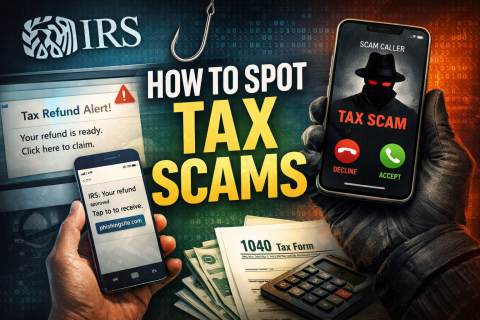
Tax filing in the U.S. is now overwhelmingly digital, and that convenience comes with new risks.
Last year, 93% of individual tax returns were filed electronically. At the same time, the IRS continues expanding digital options, from electronic refunds to online payment tools like Direct Pay. For most taxpayers, that makes filing faster and easier. But it also creates more openings for scammers looking to steal refunds, harvest personal information, and commit identity theft.
The scale of the problem is significant. In 2025, the IRS flagged roughly 2.1 million tax returns for potential identity issues, according to the Taxpayer Advocate Service.
As tax systems move further online, taxpayers need to know exactly how fraudsters operate – and how to avoid becoming their next target.
The most common tax scam tactics to watch for
Scammers tend to follow a familiar playbook during tax season. Their messages often look urgent, official, and believable. The goal is simple: get you to hand over sensitive information or send money before you stop to question it.
Fake emails and texts about your refund
One of the most common scams starts with an unsolicited text or email claiming to be from the IRS or a state tax agency. The message may say your refund has been approved or processed and direct you to click a link to claim it.
That link is the trap.
These phishing messages are designed to steal personal and financial information, including your Social Security number and bank account details. The IRS and state tax agencies do not contact taxpayers by email, text, or social media message to request personal information.
If you want to check the status of your refund, go directly to official government resources rather than clicking a link in a message.
Fraudulent offers to help set up an IRS account
Creating an IRS online account can be a smart move. It gives you access to payment history, balances, and other useful tax records. But scammers are now exploiting that process too.
Some send messages claiming IRS account setup is too difficult to complete on your own and offering to help. In reality, they are trying to collect personal information such as your address, Social Security number, or photo ID so they can commit identity fraud.
Do not share sensitive information with anyone offering unofficial setup help. If you need support, use the IRS’s own free guidance and help resources.
Phone calls claiming you owe back taxes
Not every tax scam happens online. Some still come the old-fashioned way: by phone.
In these scams, callers use official-sounding names and claim you owe unpaid taxes. They may offer to connect you with a so-called tax resolution officer or pressure you to act immediately. Their real objective is to steal your personal information or charge illegal upfront fees for fake tax relief services.
The IRS does not initiate first contact by phone. Its preferred method of contact is postal mail. If someone calls unexpectedly and pressures you about back taxes, that is a major red flag.
How to protect yourself from tax fraud
Staying alert is one of the best defenses against tax-related scams, but there are also practical steps you can take to reduce your risk.
Get an Identity Protection PIN
The IRS offers a free Identity Protection PIN, or IP PIN, to help prevent someone else from filing a tax return in your name. This six-digit number helps verify your identity when you file.
Once you create an IRS online account, you can generate your PIN through your profile. A new PIN is issued each year. It should only be entered into legitimate tax-preparation software or shared with a trusted tax professional.
Just remember: the IRS will never call, text, or email you asking for your PIN.
File your taxes as early as possible
If criminals already have your Social Security number or other personal information, they may try to file a fraudulent return before you do. Filing early can help reduce that risk by beating them to it.
Know how the IRS really communicates
A lot of scams work because they sound official. That is why it helps to know the real rules.
The IRS generally contacts taxpayers first by mail, not by text, email, or phone. It also does not use threats, aggressive pressure, or unusual payment demands involving gift cards, payment apps, or cryptocurrency.
When a message or call creates panic and pushes immediate action, that is often the first clue it is not legitimate.
Secure your tax software account
If you use online tax-preparation software such as TurboTax or H&R Block, turn on two-factor authentication. That extra login step can make it much harder for scammers to access your account, even if they manage to get your password.
What to do if you’ve been targeted
If someone has used your Social Security number or other sensitive data to commit tax fraud in your name, treat it as identity theft and act quickly.
Your first step should be to contact the IRS and use its Identity Theft Central resources. You will also need to file an Identity Theft Affidavit, IRS Form 14039, along with your tax return for the affected year.
The sooner you respond, the better your chances of limiting the damage and starting the recovery process.
Final takeaway
Digital tax filing is here to stay, and for most people, that is a good thing. But convenience should not come at the cost of security.
Tax scammers rely on urgency, confusion, and official-looking messages to trick people into giving up valuable personal information. Knowing the warning signs – especially around refund notices, fake account help, and back-tax phone calls – can help you avoid fraud before it starts.
A little skepticism can go a long way during tax season.
